
II. Six Sigma is a means to reduce the complexity of product and process designs while increasing their reliability.
III. Six Sigma is a setup to combat what is often attributed to "bad luck"; this setup is valid not only in the workshop but anywhere in the organisation.
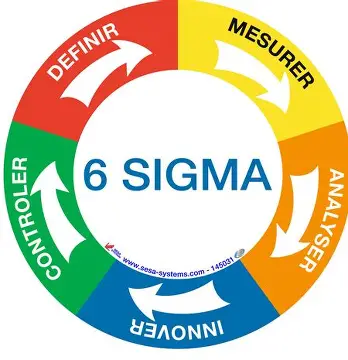
This vision can and must be quantified. Technically, Six Sigma quality is equivalent to a quality level with less than 0.000003 defects per opportunity (3 defects per million opportunities). Unfortunately, there is no immediate, simple, and easy rule to achieve such a quality level. Six Sigma is a methodology that will help achieve this goal.
II. Quality can be quantified, and indeed quality must be quantified. The diagnosis and monitoring of quality is a long-term commitment to quality. In the short term, Six Sigma is based on measurements rather than past experiences, judgments, and beliefs. If you cannot measure, you do not know where you are; if you do not know where you are, you are at the mercy of chance.
SIX SIGMA HAS TWO DRIVERS:
It is about reducing costs by improving quality; specifically, we fight against mistakes and failures, not only those detected on the test bench, but also including, for example, accepting excessively wide margins with the consequent increase in cost, defects that cause rework, administrative defects, unnecessary work, etc. All defects are, of course, work without added value. We are convinced that the current level of defects ranges between 15 and 20% of turnover; this is a good indication of the savings potential we have in our hands.
The second driver is the breaking of complacency. Six Sigma drives towards a sense of urgency and the need to achieve world-class standards. Six Sigma is an essential tool for creating such awareness, with the ultimate goal of improving profitability and competitiveness.
I. Systematic methodology.
Y=f(x,y,…z); where Y is the dependent variable; x,y,..z: independent variables.
Six Sigma provides the teachings to find this equation.
Any quality improvement work requires systematic actions and the help of statistics, whether in the long or short term.
more information contactangelyaguefernandez@gmail.com